SEO: Simple steps for better visibility and ranking
Learn simple SEO steps to improve visibility, user experience and ranking on Google and other search engines. Optimise speed, structure and content.Written by Odd-Erik Hopland Aare
Summarised by AI
- Technical SEO is the foundation of good visibility: Optimise the website's speed, structure and security for better rankings.
- User experience (UX) affects SEO results: Google rewards websites with fast load times, simple navigation and relevant content.
- A good content strategy is decisive: Use the right keywords, structured data and optimised meta tags for better visibility.
- SEO is a continuous process: Update and improve the website regularly to keep pace with Google's algorithms and the competition.

Summarised by AI
- Technical SEO is the foundation of good visibility: Optimise the website's speed, structure and security for better rankings.
- User experience (UX) affects SEO results: Google rewards websites with fast load times, simple navigation and relevant content.
- A good content strategy is decisive: Use the right keywords, structured data and optimised meta tags for better visibility.
- SEO is a continuous process: Update and improve the website regularly to keep pace with Google's algorithms and the competition.
How to rank higher on Google and other search engines
Learn simple SEO measures that improve visibility, user experience and rankings on Google and other search engines. Optimise speed, structure and content.
What is SEO and why does it matter?
Search engine optimisation (SEO) is the process of improving a website's visibility in organic search results. When users search Google for information, products or services, the places on the first page are contested. The better a website is optimised, the greater the chance that it appears high in the results, which brings more traffic, more potential customers and a higher conversion rate. This applies whether the platform is Google, Bing, ChatGPT, Yahoo or another search service.
SEO is not only about reaching the top of Google or other search engines. It also covers:
- Faster load times
- User experience (UX)
- Structure and visual hierarchy
- Optimised content, images and technical set-up
To succeed with SEO, you need to understand both technical and content-based factors. Technical SEO makes sure your website is built so that search engines can index and assess your content correctly, while content optimisation helps you give valuable and relevant answers to what users search for.
Technical SEO: the foundation of a well-functioning website
Technical SEO is the backbone of a search-friendly website. It ensures that search engines can easily understand, index and display your content in the results. A website with poor technical SEO will struggle to rank, however good the content is.
To optimise your website's technical SEO, focus on these areas:
1. Structure and visual hierarchy
A well-structured website makes it easier for both users and search engines to understand your content. When search engines analyse a website, they look for a logical organisation of the content.
- Headings (H1, H2, H3...): Use semantic HTML with a unique H1 on each page.
- Descriptive anchor text: Avoid "Click here" and write "See our SEO services" instead.
- Alt text on images: Images should always have alternative text (alt text) that describes the content for search engines and visually impaired users.
Example:
- H1: "SEO services for your business"
- H2: "How we help you become more visible"
2. Page speed and performance
Search engines prioritise fast websites because users expect quick and smooth experiences. A slow website can lead to a high bounce rate, lower rankings and lost customers.
To improve load time, you should:
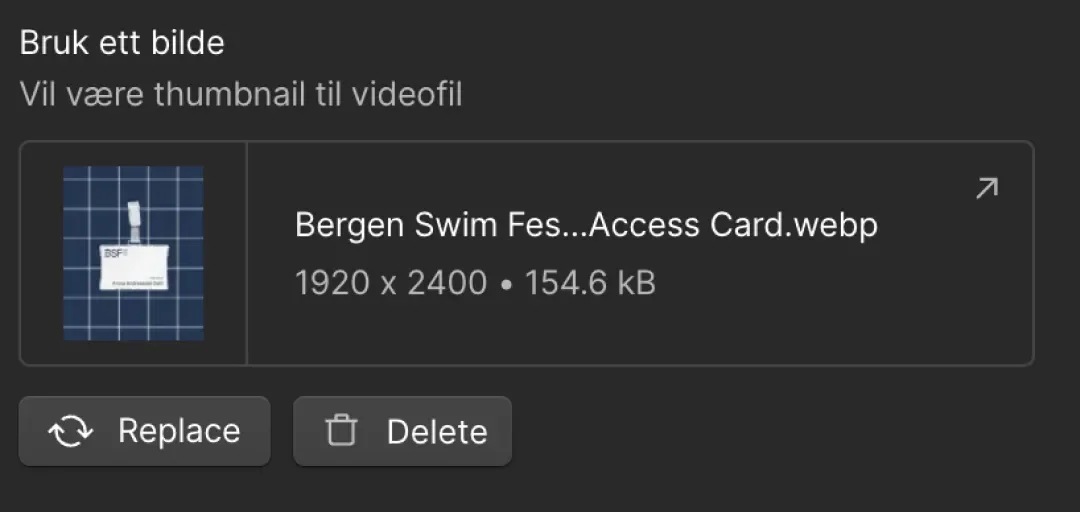
- Compress images and use the WebP format: Large image files can slow the website down. Formats such as WebP give better performance.
- Use lazy loading for images and videos: Images and videos should only load once they are visible to the user.
- Minify CSS, JavaScript and HTML: Too much code can make the website slow. Use tools such as Terser and CSSNano to reduce file size.
3. URL structure and canonical URLs
A simple, descriptive URL structure makes it easier for both users and search engines to understand what a page is about.
- Short, descriptive URLs: Avoid long, complicated URLs with random characters and numbers.
- Consistent URL structure: Keep a clear pattern in how web addresses are set up for a better user experience.
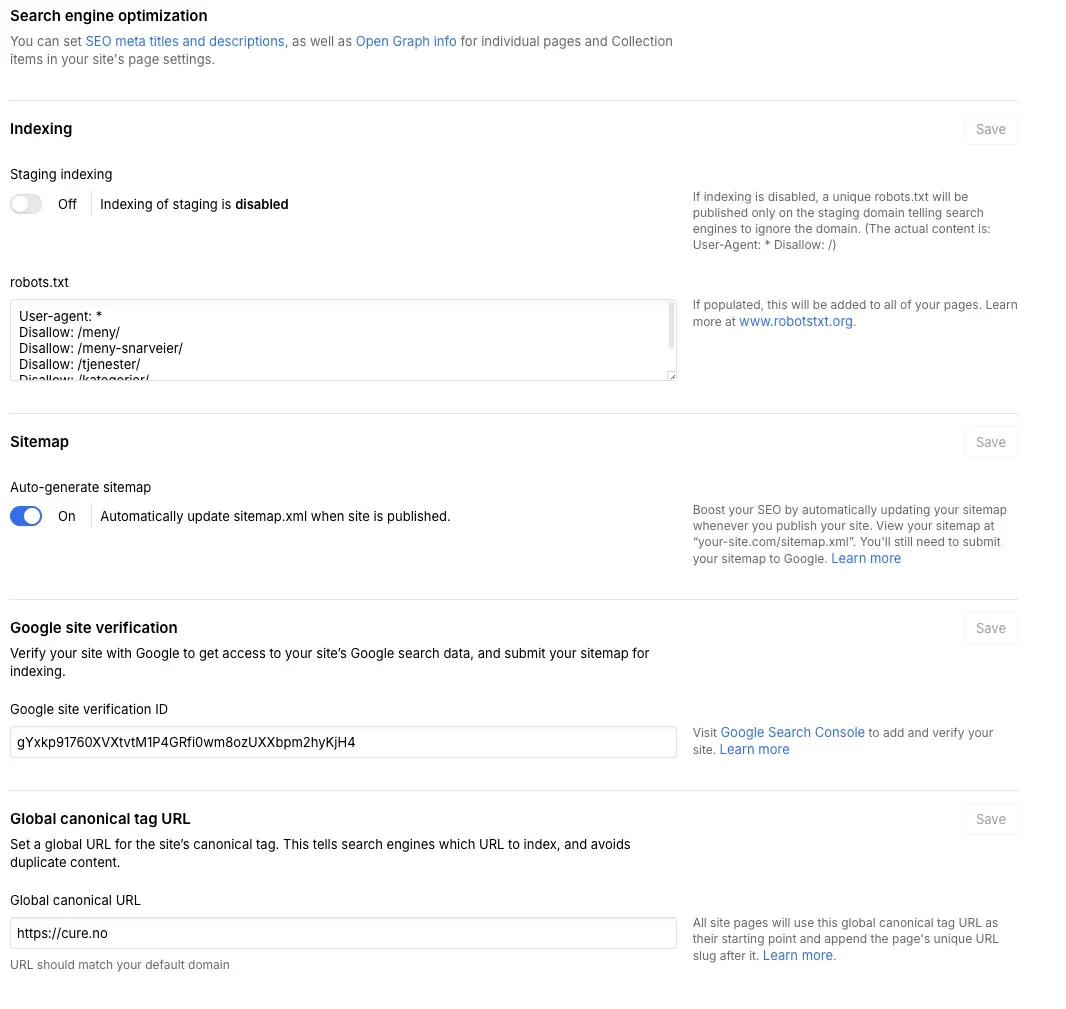
- Canonical tags: If you have several versions of the same content, specify a canonical URL to avoid duplicate content.
4. Indexing and crawling
Google and other search engines use bots to crawl websites and index content. If important pages are not indexed, they will not appear in the search results.
To make sure Google finds your content:
- Optimise robots.txt to block unwanted content.
- Use XML sitemaps and submit them to Google Search Console.
- Set up a canonical tag to avoid duplicate pages.
5. Structured data (Schema Markup)
Structured data helps search engines understand your content better, and can give you benefits such as rich snippets in the search results.
- Google's Rich Results Test can be used to check the implementation.
- Important types of structured data: Breadcrumbs, FAQ, Products.
Example: Implementing FAQ Schema can give an expanded display in the search results.
6. HTTPS and security
A secure website is one of Google's ranking factors. If your website does not use HTTPS, it can be penalised in the search results. Make sure the whole website is secured with an SSL certificate, and avoid mixed content errors where some resources load over HTTP.
On-page SEO: optimising content and metadata
To rank well, every page needs relevant, well-structured and optimised content.
1. Meta tags and titles
- Title tag: Should reflect the content and be between 30 and 60 characters.
- Meta description: A clear, descriptive text between 110 and 160 characters.
Example:
- Title: "SEO tips for 2025: how to rank higher on Google"
- Meta description: "Learn the most important SEO tips for 2025. Optimise content, technical SEO and user experience for better rankings."
2. Open Graph tags
For the best sharing on social media, pages should have:
✅ og:title: The page title
✅ og:type: The type of content (article, product and so on)
✅ og:image: The main image for the page
✅ og:url: The web address
3. Alt text for images
Use descriptive alt text for accessibility and SEO.
Poor: <img src="bilde.jpg" alt="bilde123">
Good: <img src="seo-guide.webp" alt="SEO tips for 2025: how to optimise your website">
User experience (UX) and SEO
User experience plays a big part in SEO. Google wants to give users the best results, so it favours websites that offer a good experience.
Why UX matters for SEO
- Google rewards good user experiences: A website with fast load times, simple navigation and well-structured content ranks better.
- User behaviour affects rankings: If many users leave the website quickly (a high bounce rate), it can signal poor quality and hurt the ranking.
- A good layout increases conversions: A simple, intuitive design helps users find what they are looking for faster.
How UX affects SEO results
Better rankings: Google prioritises pages that keep users engaged.
Higher conversion: Simpler navigation gives better results.
More interaction: Guides, tools and practical articles give users more value.
"Google does not just rank websites, it ranks user experiences."
How to succeed with SEO
SEO takes continuous work and optimisation. Follow these best practices:
- Technical SEO: Optimise load time, structure, URLs and indexing.
- User experience (UX): Make sure the site is simple, fast and mobile-friendly.
- On-page SEO: Use relevant titles, meta descriptions, Open Graph tags and alt text.
- Structured data: Implement Schema Markup to increase visibility.
- HTTPS and security: Secure the website with an SSL certificate.
SEO is not a one-off job but a continuous process. Changes in algorithms, competition and user behaviour mean you need to stay up to date and work systematically on improvements. If you want to know more about how we work with SEO for clients and when we build websites, get in touch with us here.